Choosing a domain registrar is one of the first and most enduring technical choices you will make when establishing an online presence. While promotional marketing often steers prospective website creators toward whichever service advertises the lowest introductory price, selecting a registrar based strictly on an entry-level promotion can lead to inflated renewal rates, recurring privacy fees, and cumbersome administrative hurdles down the road.
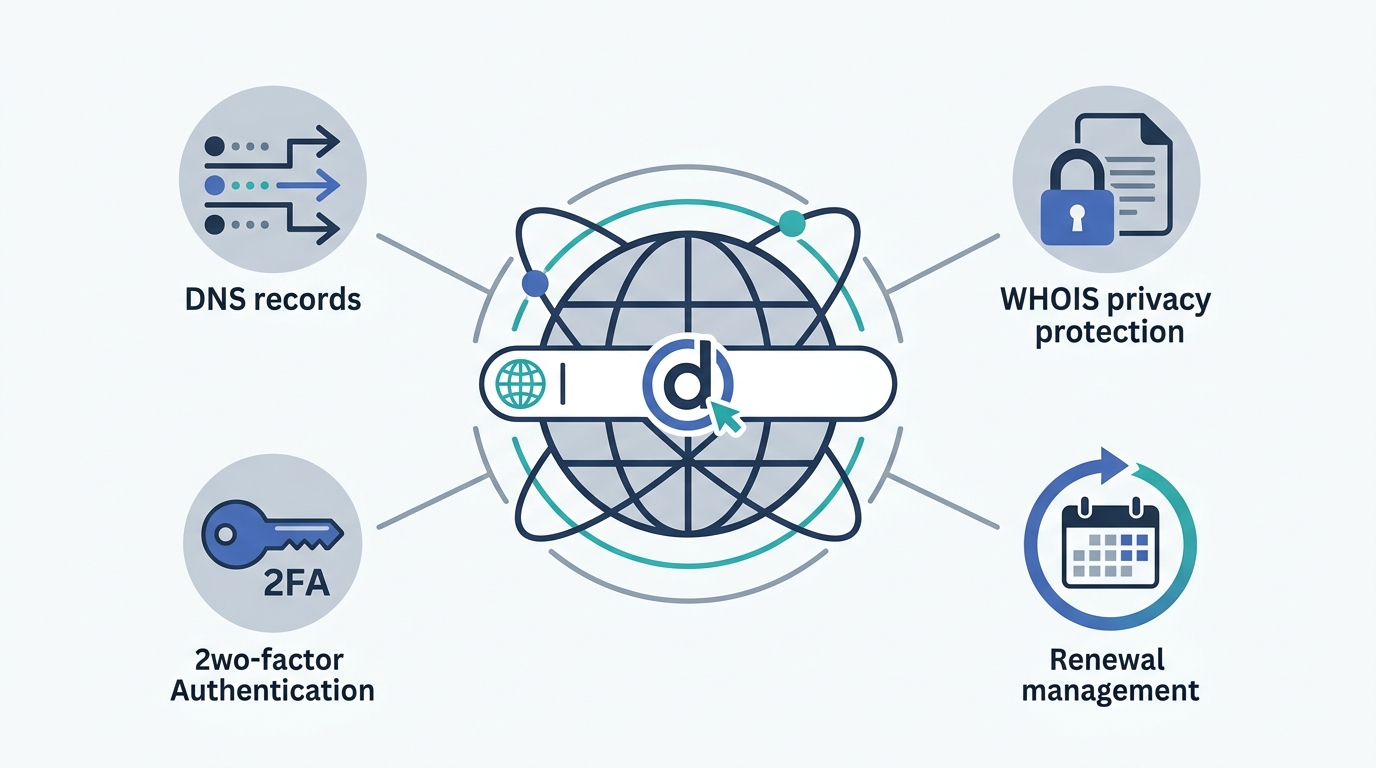
A domain registration represents an ongoing operational lease rather than a one-time purchase. Because web properties frequently operate for many years, you need to examine the full lifecycle of ownership. Beyond the initial first-year registration cost, critical factors include ongoing renewal rates, bundled domain privacy, straightforward transfer policies, reliable DNS management interfaces, comprehensive account security, transparent expiration grace periods, and clean management dashboards without deceptive checkout upsells.
The cheapest initial offer is rarely the most cost-effective solution over a multi-year horizon. Rather than declaring an arbitrary universal winner, this guide outlines an objective evaluation framework to help you compare registrars, understand technical and regulatory nuances, and secure your digital address with confidence.
What Is a Domain Registrar?
To evaluate domain providers effectively, it helps to understand how the global domain name system is structured. A domain name acts as a human-friendly address that translates easily remembered names into machine-readable IP addresses through the Domain Name System (DNS). However, owning a domain does not mean purchasing permanent real estate on the web; it means leasing the right to direct that specific name for a designated timeframe.
The domain industry operates on a tiered structure consisting of three primary layers:
ICANN
The Internet Corporation for Assigned Names and Numbers (ICANN) is the non-profit coordinating body responsible for maintaining global namespace policies, technical standards, and registrar accreditation for generic top-level domains (gTLDs).
Domain Registry
An entity that manages the master database for a specific Top-Level Domain (TLD). For example, Verisign operates the master registry for .com and .net, setting base wholesale prices and technical rules.
Domain Registrar
A retail or wholesale company accredited by ICANN (or authorized by national country-code registries) that interfaces directly with consumers, processing transactions and recording domain delegations in the master registry.
When you register a domain, your registrar communicates with the authoritative registry through automated protocols, reserving the label and delegating its authoritative nameservers. In return, the registrar charges an annual fee covering the registry wholesale cost, an ICANN transaction surcharge (currently $0.18 per year for applicable gTLDs), and the registrar's operating margin.
Registration vs. Renewal: Why the Difference Matters
The most prevalent source of frustration among new website creators stems from the sharp divergence between introductory registration rates and standard recurring renewal rates. Registrars frequently treat the initial registration as a loss-leader marketing mechanism designed to acquire customers, discounting the first twelve months by 50% to 90%.
Once that initial promotional term concludes, standard annual renewal pricing applies. A domain purchased for a promotional rate of $0.99 or $4.99 may renew at $15.99, $19.99, or even $35.00+ in year two and beyond. If you intend to operate your website over a five- or ten-year period, the introductory price represents only a small fraction of your total expenditure.
- Promotional First-Year Price: A temporary discounted rate that applies solely to the initial 12-month registration window.
- Standard Renewal Price: The regular recurring annual fee required to maintain delegation of the domain each subsequent year.
- Multi-Year Registration: Registering for up to 10 years upfront, which locks in current rates and prevents annual renewal inflation.
- Transfer Pricing: The cost to migrate an existing domain from another registrar, which under ICANN guidelines typically includes a mandatory one-year registration extension.
Before entering payment information, always locate the provider’s published renewal schedule. Evaluating the standard renewal price ensures you budget accurately for long-term ownership rather than being blindsided when automatic renewal notices arrive.
Check the Full Cost of Owning a Domain
Calculating the total cost of domain ownership requires examining every potential fee associated with keeping the domain active, private, and functional. A transparent provider presents these items clearly at checkout, whereas aggressive registrars may pre-select optional add-ons or levy separate charges for essential capabilities.
Initial Registration Cost
This is the upfront fee charged when the domain is first recorded in the registry database. In addition to the base registration fee, generic TLDs are subject to the standard ICANN fee of $0.18 per year. Some registrars bundle this fee into the displayed price, while others append it at the final payment step.
Renewal Cost
The recurring fee charged annually (or every two to ten years, depending on your billing term). Renewal pricing varies widely across different Top-Level Domains. For instance, classic extensions like .com and .org feature relatively stable registry-enforced wholesale ceilings, whereas specialized or newer generic extensions like .io, .ai, or .tech often carry significantly higher annual renewal fees.
Domain Privacy Cost
Privacy protection masks your personal name, physical mailing address, phone number, and administrative email address from public directory queries. Modern consumer-oriented registrars like Namecheap and Porkbun bundle lifetime domain privacy at no additional charge. Conversely, certain legacy registrars continue to bill privacy as an optional add-on costing anywhere from $5 to $15 per year per domain.
Transfer Cost
When transferring a domain to a new provider, the receiving registrar typically charges a transfer fee that automatically extends your active registration period by an additional twelve months. Most reputable registrars do not charge a fee to transfer a domain out of their service. Be wary of providers that introduce administrative transfer-out friction or non-standard exit fees.
Other Optional Services
Registrars frequently offer ancillary products during checkout. Understanding whether these are genuinely needed prevents cart bloat:
- Premium DNS: Anycast-routed DNS networks that offer high query throughput, advanced DDoS mitigation, and global edge redundancy. While beneficial for high-traffic corporate portals, standard authoritative DNS is sufficient for most websites.
- Custom Business Email: Mailbox hosting linked to your domain (e.g.,
contact@yourdomain.com). Some registrars include free basic email forwarding, while dedicated mailboxes typically require a monthly subscription. - Website Builders & Hosting: Bundled hosting solutions. While convenient for beginners, compare these options against dedicated solutions reviewed in our how to choose web hosting guide.
- Security Add-ons: Specialized domain lock mechanisms or registry-level locking designed to protect high-value enterprise domains from unauthorized modifications.
What Is WHOIS Privacy?
Historically, the global WHOIS database operated as an unauthenticated, publicly searchable directory containing the personal contact details of every registered domain owner—including their full legal name, home address, direct telephone number, and email address. Without privacy protection, this unredacted data was routinely scraped by automated spammers, telemarketers, and identity harvesters.
To safeguard personal information, registrars introduced privacy and proxy services. A privacy service replaces the registrant’s personal details in public directory listings with alternative proxy contact details, while forwarding legitimate legal or administrative correspondence to the actual owner.
It is an outdated misconception that every newly registered domain automatically exposes full contact information publicly. Following the implementation of the European Union's General Data Protection Regulation (GDPR) and ICANN's Temporary Specification for gTLD Registration Data, many registrars and registries now automatically redact personal data from public lookups for individual registrants by default.
However, formal registrar-provided privacy protection remains highly valuable. Registry redaction policies can vary by jurisdiction, and organizational registrants may still have details exposed. Furthermore, certain country-code top-level domains (ccTLDs) enforce strict local presence or public transparency requirements that do not permit proxy privacy services. Always verify how your registrar handles Registration Data Directory Services (RDDS) for your specific TLD.
Check Domain Renewal Prices Before You Register
Because introductory discounts can distort true operating expenses, evaluating standard renewal pricing before checkout is the single most effective habit you can adopt. In the web hosting industry, introductory pricing traps are widely documented, as detailed in our guide on the hidden costs of cheap hosting. A similar dynamic exists within domain registration.
When inspecting a registrar’s pricing structure, systematically check the following parameters:
1. Standard Renewal Rates Across Specific TLDs
Never assume that a discount on a .com applies to other extensions. While .com renewals typically hover within an industry baseline, specialized extensions such as .store, .online, or .cloud can carry renewal fees three to ten times higher than their introductory promotional prices.
2. Price Guarantees & Wholesale Transparency
Registrars like Porkbun and Cloudflare operate on low, transparent markups above registry wholesale costs. Compare the standard renewal rate listed on the registrar's dedicated TLD pricing page against competitors to ensure fair long-term pricing.
3. Taxes and Mandatory Surcharges
Confirm whether applicable local sales taxes, VAT, and the annual $0.18 ICANN fee are included in the headline renewal rate or itemized separately at checkout.
4. Automatic Renewal Mechanics
Verify how many days prior to expiration auto-renewal charges are initiated, and ensure the registrar sends advance notification emails so you can review charges before payments process.
Look at Domain Transfer Policies
Registering a domain does not require remaining with that initial provider indefinitely. Under ICANN regulations, domain owners have the legal right to transfer generic top-level domains between accredited registrars. However, understanding transfer rules prevents unexpected lockouts when you wish to consolidate services or seek better pricing.
The 60-Day Lock Rule
Under official ICANN Transfer Policy, generic top-level domains cannot be transferred to a different registrar within 60 days of initial registration or within 60 days following a prior transfer. Additionally, making material changes to the registrant’s name, organization, or email address may trigger an optional 60-day change-of-registrant lock, unless the registrar permits an explicit opt-out during contact updates.
Standard Transfer Requirements
To successfully initiate a transfer between registrars, the following conditions must be satisfied:
- Domain Status Unlocked: You must toggle off the registrar transfer lock (also known as
clientTransferProhibited) inside your current management dashboard. - Authorization / EPP Code: You must request a unique authorization code (also referred to as an EPP code or transfer key) from your losing registrar and submit it to the gaining registrar.
- Valid Administrative Email: Verification emails must reach a functional administrative contact address to authorize the transfer request.
- Active Registration Status: The domain cannot be in a pending redemption or deletion status.
Note that transfer rules can vary significantly for country-code top-level domains (ccTLDs like .uk, .de, or .ca). These registries operate under national regulatory frameworks independent of ICANN and may enforce different transfer mechanics, authorization codes, or verification steps.
Evaluate DNS Management
A domain registrar is responsible not only for billing your annual lease but also for providing the authoritative Domain Name System (DNS) zone editor that connects your domain name to web servers, email providers, and security verification systems. A poorly designed or slow DNS control panel creates unnecessary technical friction.
A capable domain management dashboard should provide full, unrestricted editing for essential DNS record types:
A & AAAA Records
Point your domain or subdomains directly to server IPv4 (A) and IPv6 (AAAA) addresses where your website files are hosted.
CNAME Records
Canonical name aliases that map subdomains (such as www) to external hostnames or content delivery networks.
MX Records
Mail exchanger records that route inbound business email to providers like Google Workspace or Microsoft 365.
TXT Records (SPF, DKIM, DMARC)
Text records critical for verifying site ownership with search consoles, as well as publishing email authentication records to prevent spoofing.
Additionally, verify that the registrar allows you to delegate custom nameservers effortlessly. If you choose to manage DNS through specialized edge networks like Cloudflare, your registrar must allow you to change authoritative nameservers without locking you into proprietary services or charging configuration fees.
Check Domain Security Features
Your domain name is the single most valuable digital asset in your online infrastructure. If an unauthorized attacker gains access to your registrar account, they can alter DNS records, redirect web traffic to phishing portals, intercept incoming corporate emails, and initiate unauthorized transfers. Consequently, registrar account security is paramount.
Two-Factor Authentication (2FA)
A reputable registrar must support robust Two-Factor Authentication. Look for providers that support standardized Time-based One-Time Passwords (TOTP) via authenticator apps (such as Google Authenticator, 1Password, or Bitwarden) or hardware security keys (FIDO2 / WebAuthn like YubiKeys). Avoid registrars that rely exclusively on insecure SMS-based verification, which remains vulnerable to SIM-swapping attacks.
Registrar & Transfer Locks
Ensure the registrar automatically applies a registrar lock (clientTransferProhibited) to all active domains by default. This status prevents unauthorized parties from initiating transfer requests without first logging into the authenticated dashboard and explicitly unlocking the domain.
DNSSEC (Domain Name System Security Extensions)
DNSSEC adds cryptographic signatures to DNS records, authenticating that the DNS responses received by visitor browsers truly originated from your authoritative nameserver rather than a spoofed or poisoned cache. Modern registrars like Namecheap and Porkbun provide one-click DNSSEC activation without additional subscription charges.
Understand Domain Expiration and Renewal Policies
Failing to renew a domain on time can result in website downtime, disconnected email services, and potential loss of the domain name to automated auction houses. However, domains do not instantly disappear the moment an expiration date arrives. Reputable registrars follow established lifecycle stages that allow owners to recover expired names.
When auto-renewal is enabled, the registrar attempts to process payment between 30 and 1 day prior to the expiration date. Registrars send multiple email reminders leading up to this threshold.
Immediately after expiration, the domain enters a grace period. Nameservers are deactivated, taking website and email services offline, but the original owner can typically renew the domain at standard renewal rates without penalty.
If unrenewed during the initial grace period, the registry places the domain in redemption. Restoring a domain during redemption requires paying both the standard renewal fee and a substantial registry restoration fee (often $80 to $200+ depending on the TLD).
If unredeemed, the domain enters pending delete status (usually 5 days), after which it is released back into the public pool for anyone to register, or acquired through expired-domain auctions.
*Note: Exact grace period durations and redemption availability depend on specific registrar terms and registry policies for each TLD. Always review your provider’s documented expiration timelines.
Check the Registrar's Management Tools
The usability of a registrar’s administrative dashboard significantly affects your ongoing experience. Some registrars design clean, responsive portals optimized for rapid administration, while others clutter interfaces with persistent cross-sells, confusing multi-step menus, or slow portal loading times.
When evaluating a registrar’s management interface, prioritize the following practical capabilities:
- Consolidated Portfolio Overview: A clear, searchable dashboard displaying all active domains, expiration dates, auto-renewal toggles, and privacy statuses at a glance.
- Bulk Domain Management: The ability to update contact details, nameservers, or auto-renewal preferences across multiple domains simultaneously—indispensable for agencies and portfolio managers.
- Intuitive DNS Record Editing: Fast inline editing for A, CNAME, and MX records without cumbersome validation redirects.
- Effortless Contact Management: Straightforward tools to update registrant, administrative, and technical contact details accurately.
- Billing Transparency: Clear payment history, downloadable invoices, and multiple supported payment methods without forced recurring commitments for unneeded add-ons.
Consider Customer Support
While domain registration rarely requires frequent intervention once configured, having responsive technical assistance is crucial when critical issues arise—such as resolving transfer discrepancies, recovering access to an account, or troubleshooting complex DNS delegations.
Evaluate prospective registrars based on practical support criteria:
Available Support Channels
Check whether support is delivered via 24/7 live chat, ticket-based helpdesks, or phone support. A provider with fast, responsive chat is particularly useful for urgent domain delegation checks.
Documentation & Knowledge Base
Comprehensive, updated tutorials explaining step-by-step DNS record creation, email record setup (SPF/DKIM), and domain transfer workflows reduce the need for manual tickets.
Domain-Specific Expertise
Verify that frontline support agents understand DNS propagation, registry-level holds, and EPP status codes rather than merely reading from generic billing scripts.
Account Recovery Verification
Ensure the registrar enforces strict identity verification protocols for account recovery, protecting your domain from social engineering takeovers while maintaining a path for legitimate recovery.
Should You Keep Your Domain and Hosting With the Same Company?
One of the most frequent dilemmas website owners face is whether to register a domain through their web hosting company or keep the two services with separate, specialized providers. Neither approach is universally superior; each presents distinct operational trade-offs.
Keeping Domain & Hosting Together
Potential Advantages:
- Single consolidated account and unified billing renewal date.
- Automated DNS configuration; nameservers and web hosting records connect automatically with zero manual editing.
- Often bundled with a promotional "free domain for year one" in initial hosting contracts.
Potential Considerations:
- Higher domain renewal rates; web hosts frequently charge higher markups on recurring domain renewals than specialized registrars.
- Vendor lock-in; changing hosting providers later requires either transferring the domain or manually pointing DNS records elsewhere.
- Single point of account access; an account compromise exposes both server files and domain delegations simultaneously.
Keeping Domain & Hosting Separate
Potential Advantages:
- Greater operational flexibility; you can migrate web hosts at any time by simply updating DNS A records without moving the domain itself.
- Lower, more predictable domain renewal pricing and bundled privacy from dedicated registrars.
- Enhanced security isolation; compromising a web server does not grant control over your root domain registration.
Potential Considerations:
- Managing multiple vendor dashboards, logins, and billing invoices.
- Requires basic understanding of DNS to point nameservers or A records to your hosting server during initial setup.
If you prefer effortless initial setup and unified billing, bundling services with a transparent web host can be practical. However, if you manage multiple sites or prioritize long-term mobility, registering domains through a dedicated, low-cost registrar like Namecheap or Porkbun provides superior control.
How to Choose a Registrar for Different Types of Users
Different website projects have different operational needs. Determining which registrar characteristics matter most depends heavily on your specific role and long-term plans.
For a First-Time Website Owner
Prioritize registrars with clear, uncluttered checkout screens that bundle free lifetime WHOIS privacy automatically and avoid aggressive upsells. A clean management dashboard with helpful documentation and responsive live chat assistance ensures you can connect your domain to a website builder or host without confusion.
For a Freelancer or Web Designer
Focus on registrars that offer account-sharing or delegate access permissions. This allows you to manage DNS records for client domains without requiring their primary account passwords or payment details. Transparent renewal pricing ensures your clients are not hit with unexpected cost increases.
For Someone Managing Multiple Domains (Portfolio Owners)
Look for low markup margins near registry wholesale costs, robust bulk editing tools (bulk DNS, bulk contact changes, bulk auto-renewal toggles), and comprehensive export capabilities. Saving even $3 to $5 per domain annually translates into substantial savings across a large portfolio.
For a Business or Corporate Website
Prioritize advanced account security features, including mandatory hardware security key (FIDO2) authentication, IP-restricted login sessions, DNSSEC support, and high-availability Anycast DNS with strict uptime service level agreements (SLAs).
For Someone Planning to Move Domains Later
Verify that the registrar allows seamless self-service domain unlocking and instant EPP authorization code generation directly within the dashboard, without requiring manual contact with customer service or imposing arbitrary delays.
Domain Registrar Comparison Checklist
Use this practical, interactive checklist before registering a new domain name. Reviewing these twelve points helps ensure you select a provider with transparent policies, predictable costs, and robust security.
Interactive Pre-Registration Checklist
Common Domain Registrar Mistakes to Avoid
Navigating domain registration is straightforward once you know what pitfalls to watch for. Avoiding these eight common mistakes will save you time, money, and administrative headaches:
1. Choosing Solely Based on First-Year Promotional Price
A heavily discounted initial rate ($0.99 or $1.99) can be misleading if renewal pricing in year two spikes to $20.00+. Calculate your projected 3- to 5-year ownership cost rather than looking only at year one.
2. Ignoring Recurring Renewal Prices
Failing to review the registrar’s published standard renewal table before registering can result in unpleasant billing surprises when automatic annual charges occur.
3. Assuming Privacy Is Automatically Included for Free
While modern providers include lifetime privacy, legacy registrars often charge $5 to $15 per year per domain. Always confirm that privacy is bundled at no additional cost.
4. Overlooking Transfer Policies and Exit Friction
Some registrars make retrieving EPP authorization codes unnecessarily difficult, requiring manual support tickets or imposing confusing confirmation steps when transferring out.
5. Neglecting Auto-Renewal Settings and Payment Details
Letting an expired credit card remain on file with auto-renewal disabled can lead to accidental expiration and service disruptions. Always maintain up-to-date backup payment methods.
6. Registering Without Checking TLD Eligibility Rules
Certain country-code extensions (like .eu, .ca, or .us) enforce strict citizenship, local presence, or business registration prerequisites. Verify requirements prior to purchase.
7. Using Weak Account Security and Password Practices
Failing to enable multi-factor authentication (TOTP or hardware keys) leaves your root domain exposed to credential stuffing attacks and domain hijacking.
8. Purchasing Unnecessary Cart Add-ons
Registrars often pre-select paid add-ons such as expensive website builders, basic email forwarding, or proprietary search engine submission tools. Deselect unneeded items before finalizing your purchase.
Frequently Asked Questions
Concise, factual answers to the most common questions regarding domain registrars, pricing transparency, and ownership rules:
Conclusion
Selecting a domain registrar should always involve looking beyond introductory promotional rates. A digital address is the bedrock of your online identity, making long-term stability, predictable renewal pricing, bundled privacy protection, clean DNS management tools, robust account security, and transparent expiration rules far more consequential than a temporary first-year discount.
Before registering a domain, compare the registrar's pricing, renewal terms, privacy options, DNS tools, security features, and transfer policies. Taking a few moments to review these factors ensures you secure a reliable home for your domain with zero unexpected surprises down the road.
Review documented renewal rates, bundled privacy policies, and technical features across verified providers.
View our side-by-side comparative analysis, pricing breakdowns, and editorial guides.